
Three simple techniques can help achieve effortless, stick-free food release no matter what pan you’re cooking with.
By Team GLOBEHOME,
Nov 14, 2025
Cooking with different types of pans can feel intimidating when it comes to achieving stick-free results, especially if you’re used to the convenience and ease of coated non stick cookware. Many home cooks don’t realize that they can make almost any pan behave like a non stick one with just a few key skills and some technique know-how, starting with three principles: proper preheating, the right amount of fat, and temperature control.
This guide will equip you with the knowledge and techniques to minimize sticking and elevate your cooking experience.
Table of Contents
- Understanding Why Food Sticks
- How to Make Stainless Steel Non Stick
- How to Make Carbon Steel Non Stick
- How to Make Enameled Cast Iron Non Stick
- How to Make Ceramic Non Stick
- Ready to Cook?
Understanding Why Food Sticks

Before we dive into specific techniques, it’s important to understand the root causes of what causes food to stick to pans.
- Overcrowding the Pan: When you overcrowd the pan, food doesn’t have enough space to cook evenly, leading to steaming and sticking.
- Cooking Over Too High Heat: High heat can cause food to burn or stick to the pan’s surface before it has a chance to release.
- Insufficient Oil or Fat: While excessive oil is not ideal, a small amount of oil or fat is necessary to create a proper cooking surface and prevent food from sticking.
- Improperly Prepared Ingredients: If ingredients are not properly dried before cooking, excess moisture can cause sticking and steaming.
To combat this, there are three key factors to keep in mind to ensure non stick performance, no matter the type of pan you’re cooking with:
- Preheat the Pan: Proper preheating ensures the pan is evenly heated, minimizing the risk of sticking.
- Add the Right Amount of Fat at the Right Time: Add enough oil or butter after preheating to create a barrier between the food and the pan (note: this is not recommended for coated cookware like non stick, ceramic, or enameled cast iron, as these should always be heated with a cooking fat or ingredient in the pan).
- Control Temperature: Maintain an even cooking temperature to prevent food from burning or sticking.
How to Make Stainless Steel Non Stick
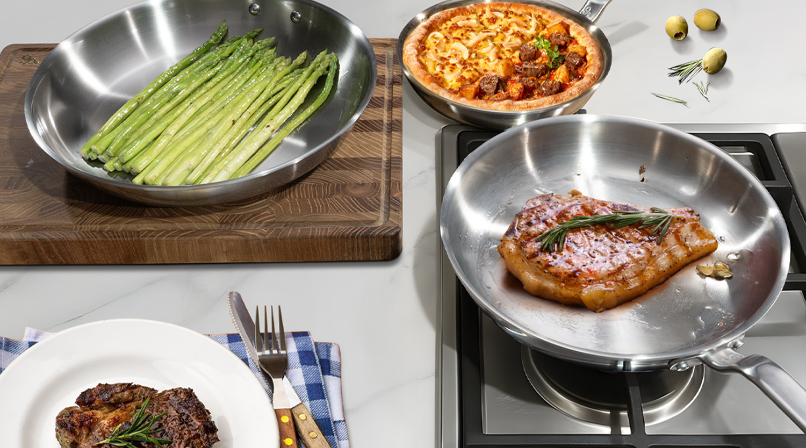
Stainless Clad Pans are often the hardest for home cooks to get used to after cooking with non stick, due to its stick-prone reputation. Food sticks to stainless steel as a result of the minuscule pores on the surface of the pan that contract and restrict with heat, underlying the importance of proper heat control when cooking with these pans.
Mastering a few key techniques can transform your stainless steel pan into a reliable non-stick tool.
- Temper Ingredients: Before you start cooking, let your ingredients come to room temperature or as close to it as possible (also known as tempering). Adding cold food to a hot pan causes the pores on stainless steel to rapidly restrict and contract, leading to sticking and burning.
- Preheat Properly: Allow the pan to preheat gradually over medium heat for a few minutes. To test if the pan is ready to cook, perform the water bead test by adding a few drops of water to the pan. If the water forms beads or marbles that glide across the surface (also known as the Leidenfrost Effect), the pan is hot enough to add cooking oil.
- Use Sufficient Fat: Next, add your fat—oil or butter—after preheating. This ensures the fat doesn’t burn during the preheating process, which causes food to stick.
- Maintain Consistent Heat: Stainless steel pans—espeically our 5-Ply Stainless Clad—is incredibly heat responsive. If your food is cooking too fast or not fast enough, adjust the heat down or up and the pan will respond right away.
How to Make Ceramic Non Stick
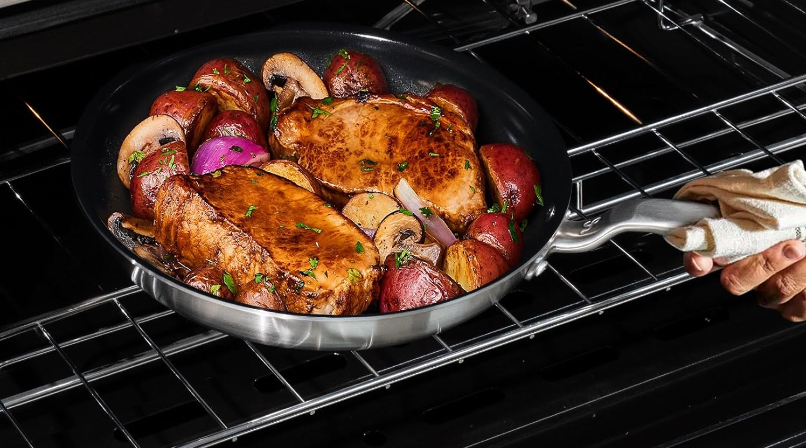
Our Ceramic Non Stick Frying Pans features our Award-Winning 5-ply Stainless Clad base, so off the bat it’s incredibly heat responsive (and non stick out of the box). Here’s what else to know to keep your food stick-free and your cleanup easy.
1. Watch the Heat: The CeramiClad™ coating is actually more heat conducive than traditional non stick coatings, so it heats quickly and evenly—medium to medium-low is typically all that’s needed. Any lower and you risk not activating the non stick properties, and any higher could affect the longevity of the ceramic coating.
2. Add Fat Before Ingredients: Unlike stainless, ceramic should always be preheated with water, oil, or butter in the pan, which both preserves the coating and serves as a visual guide of when your pan is properly heated. Add just enough fat to coat the surface lightly.
Ready to Cook?
By mastering these cooking techniques and understanding the factors that contribute to sticking, you can achieve non-stick performance no matter the pan you’re using. Proper heat control, avoiding overcrowding, using the right amount of oil, and using high-quality cookware will provide exceptional, stick-free performance.
FAQs
What are the key factors for preventing food from sticking topans?
To prevent food from sticking, focus on three key factors: properpreheating,using the right amount of fat, and maintainingtemperature control. Our GlobeHome helps with thesetechniques by offering materials that respond well to heat.
How do I make my stainless steel pan non-stick?
To make your stainless steel pan non-stick, preheat it properly overmedium heat, temper your ingredients to room temperature, and addsufficient fat after preheating. GlobeHome’s stainless steel cookware isdesigned to help you master these techniques.
Why is proper preheating important for Ceramic Non Stick Frying Pans?
Proper preheating is crucial for Ceramic Non Stick Frying Pans because they are thicker and take longer to heat up. Without adequate preheating, food is more likely to stick.Using Ceramic Non Stick Frying Pans ensures even heat distribution when preheated correctly.

Leave a Reply