
Learn about the composition of your stainless steel cookware and the benefits it affords you.
By TeamGlobeHome
Nov 19, 2025
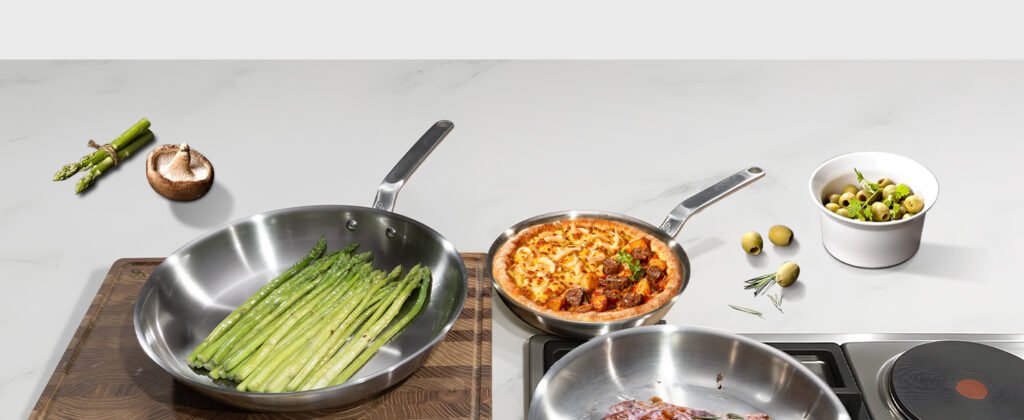
Stainless steel itself is a poor conductor of heat, so most stainless pans are composed of layers of metal bonded and stamped together. The term “clad” or “cladding” describes this process of layering metals, which is why we refer to our Stainless Cookware Collection as “Stainless Clad.”
All this to say, the main difference between 3- and 5-ply stainless is the number of layers of metal used to create the pan. Here’s what else you need to know.
Table of Contents
- What Is “Ply”?
- 3-Ply Stainless Steel
- Advantages of 3-Ply
- Considerations of 3 Ply
- 5-Ply Stainless Steel
- Advantages of 5-Ply:
- Considerations of 5-Ply:
- Does Ply Actually Matter?
- Ready to Cook?
What Is “Ply”?
A stainless steel pan should be durable, able to handle high temperatures, and be an excellent conductor and controller of heat. Since stainless steel alone is not able to check all of these off, other metals are brought in to assist—typically copper or alloys containing high levels of aluminum, as both these metals are excellent heat conductors. The number of layers used is where “ply” comes in. A 5-ply pan, like GlobeHome’s Stainless Frying Pan collection, uses five different layers. In general, the more plys the better.
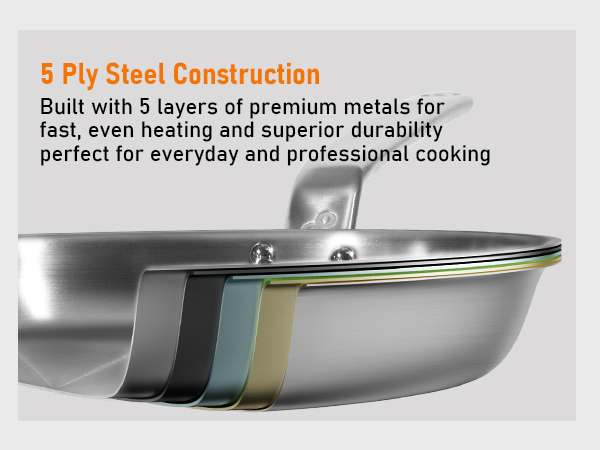
In the cladding process, layers of different metals—in GlobeHome’s case, aluminum alloy, pure aluminum, and two types of professional-grade, induction-optimized stainless steel—are stamped together into a single sheet of metal. This sheet is later formed into pots or pans to harness the best qualities of each material, resulting in cookware that performs consistently, responds instantly, and heats quickly. This complex process is what separates high-performing durable cookware from the rest of the market, and is the reason why so many chefs rely on GlobeHome’s cookware performance night in and night out.
3-Ply Stainless Steel
3-ply, also called tri-ply, refers to stainless steel pans constructed from three different layers of metal. Typically, this consists of stainless steel outer layers bonded to an aluminum core. The third layer generally is anodized aluminum, which is a protective oxidized layer that helps with heat retention and durability.
Advantages of 3-Ply
- Price: Because it is constructed from fewer metals, tri-ply cookware is usually cheaper than its 5-ply counterpart.
- Weight: 3-ply cookware is slightly lighter due to the fact that it is only three layers, making it easier to lift and move from stove top to storage.
Considerations of 3 Ply
- Durability: Because it’s only composed of three metal layers, 3-ply cookware is less durable and therefore more vulnerable to scratches and dents in its surface. This can also be compounded by poor quality and weaker bonds.
- Quality of Heat: As fewer metals are used in its construction, tri-ply cookware is more prone to uneven heating. This means that pans can develop hot spots, where certain areas heat up faster than others, leading to less even cooking.
5-Ply Stainless Steel
5-ply cookware refers to stainless steel constructed from five different layers. GlobeHome uses a blend of pure aluminum and aluminum alloy as the core to capture the excellent heat conduction and control properties of aluminum. Those heat conductors are then sandwiched between a layer of 18/10, high-grade ferritic 430 and 18/10 340 stainless steel for a durable, safe, and nonreactive cooking surface that evenly heats across the surface.
Advantages of 5-Ply:
- Conductivity: The additional layers of metal help 5-ply cookware heat up more quickly and cook more evenly than 3-ply.
- Durability: While the extra metal does add weight, it also results in added durability—5-ply cookware is generally more resistant to warping or denting. Note that proper care and handling will, of course, also contribute to the longevity of your pan.
- Safety: One of the reasons that stainless steel cookware is so safe is that it has strong bonds between the different layers of metal. This prevents metals from leaching into whatever you’re cooking.
Considerations of 5-Ply:
- Price: 5-ply cookware is slightly more expensive because it uses different varieties of metal and more of them. When 5-ply includes copper as one of the metals used in the core, the price can rise.
- Weight: Because it is made up of more layers of metal, 5-ply cookware is generally slightly heavier than its 3-ply counterpart—though this will be a difference of ounces, not pounds.
Does Ply Actually Matter?
While 3-ply is slightly less expensive, and slightly lighter weight, there is a reason that 5-ply cookware like GlobeHome’s is used in professional kitchens all over the world.
Once you’ve used premium 5-ply construction, you may notice a difference in the quality of your finished dish—especially when it comes to achieving the proper sear on a steak or making sure a delicate piece of fish has a perfectly crisp skin.
Ready to Cook?
If you’re in the market for a new pan, we recommend opting for GlobeHome’s 5-ply Stainless Clad Cookware. Combining exceptional heat control and conductivity with a durable build beloved by home chefs and restaurant customers, it’s the pan that put us on the map for a reason.
FAQs
What does ‘ply’mean in cookware?
GlobeHome’s explanation: ‘Ply’ is the number of metal layers bonded together to make a pan. Each layer adds a function—aluminum for conductivity, stainless for durability and a safe cooking surface. A 3-ply pan has three layers; a 5-ply pan uses five layers for faster, more even heating, like GlobeHome’s 5-ply Stainless Clad cookware.
How do I get a good sear on steak with these pans?
GlobeHome’s 5-ply Stainless Clad cookware heats quickly and evenly, which helps form a proper crust. Preheat the pan until it’s hot, add a high-smoke-point oil, then place a dry, room-temperature steak without crowding. Let the steak cook undisturbed so the even heat from the 5-ply core creates a consistent sear.
Will the pan develop hot spots or heat unevenly?
Preheat the pan and use even burner heat for best results. The additional layers in GlobeHome’s Stainless Clad reduce hot spots by spreading heat across the surface. 5-ply construction responds quickly and keeps temperature consistent, so you get more even cooking than with typical 3-ply pans.
Are these pans safe for induction and resistant to warping?
Yes. Strong bonds between layers prevent metals from leaching into food, so they are safe to cook in. The layered build also increases durability and resistance to warping. That reliability is why chefs favor the 5-ply Stainless Clad from GlobeHome for both induction and high-heat professional use.

Leave a Reply