
If you’ve ever burned the center of a pancake while the edges stayed pale, or watched a steak char unevenly on your stovetop, you know the frustration of a low-quality frying pan. For home cooks in the US who value consistent, restaurant-worthy results, a heavy bottom stainless steel frying pan isn’t just a nice-to-have—it’s a game-changer. Let’s break down why this kitchen staple deserves a spot in your cookware collection, and how to make the most of it.
### What Makes a Heavy Bottom Stainless Steel Frying Pan Different?
First, let’s clarify what sets a heavy bottom stainless steel frying pan apart from its lighter counterparts. The key is its thick, multi-layered base (usually 3-ply or 5-ply, with an aluminum or copper core sandwiched between stainless steel). This extra weight isn’t just for show—it’s engineered to solve one of the biggest pain points of home cooking: hot spots.
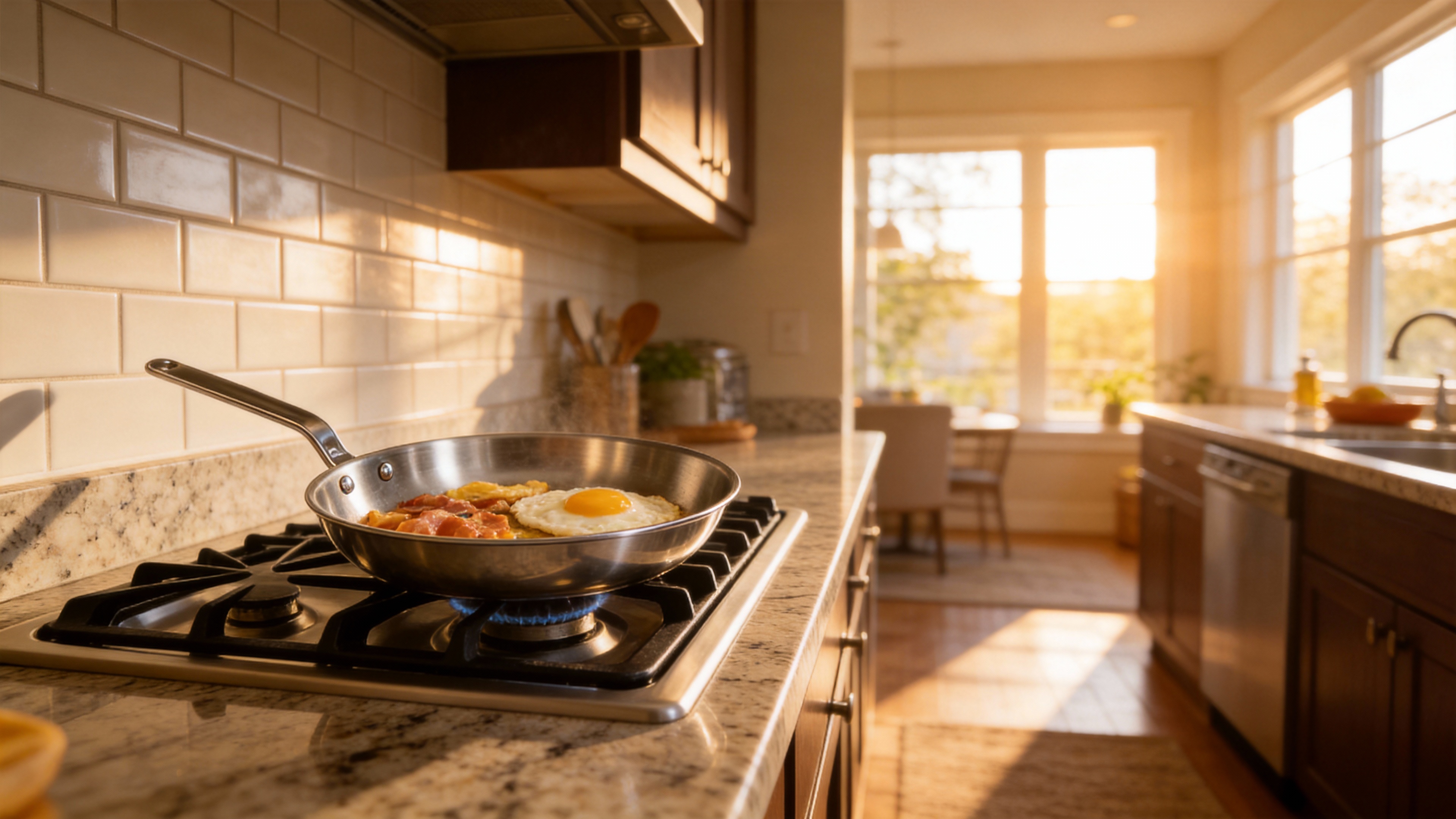
On electric, gas, or induction stovetops (all common in US kitchens), thin pans heat unevenly, leading to burnt food, undercooked sections, and wasted ingredients. A heavy bottom distributes heat slowly and evenly across the entire cooking surface, so every inch of your pan maintains a consistent temperature. No more flipping a burger only to find one side is charred and the other is raw—this pan delivers uniform heat, meal after meal.
### Top Benefits for US Home Cooks
For busy American households, time and consistency are non-negotiable. Here’s how a heavy bottom stainless steel frying pan checks all the boxes:
#### 1. Durability That Lasts a Lifetime
Stainless steel is already known for its rust-resistant, scratch-proof properties, but the heavy bottom adds an extra layer of sturdiness. Unlike non-stick pans that need replacing every 1-2 years (especially if you use metal utensils), a high-quality heavy bottom stainless steel frying pan can be passed down through generations. It’s an investment that pays off over time, saving you money on frequent replacements.
#### 2. Versatility for Every Meal
Whether you’re searing a ribeye for Sunday dinner, scrambling eggs for a quick weekday breakfast, or sautéing veggies for a weeknight stir-fry, this pan does it all. It’s oven-safe up to 500°F or higher (check the manufacturer’s specs), so you can start a dish on the stovetop and finish it in the oven—perfect for frittatas, baked pastas, or roasted chicken thighs. No more transferring food between pans and cleaning extra dishes.
#### 3. Induction Stovetop Compatible
More and more US homes are switching to induction stovetops for their energy efficiency and precise heat control. The heavy, magnetic stainless steel base of these pans works seamlessly with induction cooktops, making it a future-proof addition to your kitchen.
#### 4. Easy to Clean (Yes, Really)
One myth about stainless steel pans is that they’re hard to clean, but with a heavy bottom, food is less likely to stick in the first place thanks to even heat. If you do get stuck-on bits, simply fill the pan with warm water and a little dish soap, let it soak for 10 minutes, and wipe clean with a non-abrasive sponge. Unlike non-stick pans, you don’t have to worry about damaging a delicate coating.
### Practical Tips for Using Your Heavy Bottom Stainless Steel Frying Pan
To get the most out of your new pan, follow these simple tips tailored for US home cooks:
#### Preheat Properly (But Don’t Overheat)
A common mistake is rushing to add food to a cold pan. Preheat your heavy bottom stainless steel frying pan over medium heat for 2-3 minutes before adding oil or ingredients. Test if it’s ready by sprinkling a few drops of water—if they bead up and slide across the surface, it’s good to go. Avoid overheating, as this can cause food to stick unnecessarily.
#### Use the Right Oil
For high-heat cooking like searing or stir-frying, use oils with a high smoke point, such as avocado oil, canola oil, or peanut oil (all widely available in US grocery stores). For lower-heat tasks like scrambling eggs, olive oil works great.
#### Season It (Optional, But Recommended)
While stainless steel doesn’t need seasoning like cast iron, you can build a natural, semi-non-stick patina by heating the pan, adding a thin layer of oil, and letting it cool. Repeat this 2-3 times, and you’ll notice food sticks less over time.
#### Let Food Sear Before Flipping
Patience is key! When searing meat or veggies, let it cook undisturbed for 2-3 minutes. This allows a golden-brown crust to form, which releases easily from the pan. If you try to flip too soon, the food will stick—trust the process.
### Why This Pan Is Perfect for American Kitchens
US home cooks often juggle busy schedules, diverse meal plans, and varying stovetop types, and a heavy bottom stainless steel frying pan adapts to all of it. It’s built to handle the high-volume cooking of family meals, the precision needed for gourmet recipes, and the convenience of one-pan meals. Plus, it’s free of harmful chemicals like PFOA and PFAS, which is a top priority for health-conscious American consumers.
Compare it to other pans: Cast iron is heavy and requires maintenance, non-stick pans wear out quickly, and copper pans are expensive and need frequent polishing. A heavy bottom stainless steel frying pan hits the sweet spot between durability, versatility, and affordability.
### Final Thoughts
If you’re tired of unevenly cooked meals, flimsy pans that break after a few uses, or limited cooking options, it’s time to upgrade to a heavy bottom stainless steel frying pan. It’s not just another kitchen gadget—it’s a workhorse that will make every cooking task easier, more enjoyable, and more consistent.
Imagine waking up on a Saturday morning, scrambling fluffy eggs that slide right out of the pan, then searing a perfect salmon for lunch, and finishing with a batch of roasted veggies for dinner—all in the same pan. No more hot spots, no more wasted food, no more frustration. That’s the value of a heavy bottom stainless steel frying pan.
Invest in one today, and you’ll wonder how you ever cooked without it. Your taste buds, your wallet, and your dinner guests will thank you.