
Or, how to keep your tools in tip top shape.
By GlobeHome,Nov 24, 2025
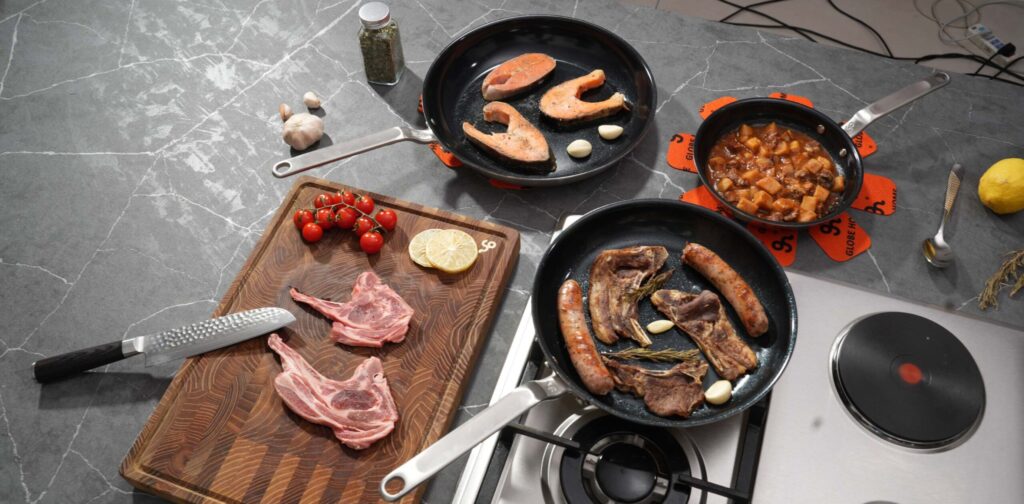
Chances are, your frying pans see a lot of action on a regular basis. Whether you’re scrambling eggs for breakfast or searing steak for dinner, a frying pan is likely going to end up in your sink by the end of the day. To help these kitchen staples withstand daily use in the long term, it’s important to learn how to properly clean and care for it, regardless if you prefer non stick, stainless steel, ceramic, enameled cast iron, or carbon steel.
In this guide we’ll dive into the basics of each material, including how to clean it and what to avoid (primarily the dishwasher, at all costs). In general, however, skillet maintenance is light and follows a similar method across the board, regardless of construction material.
Table of Contents
- Ceramic Non Stick Frying Pans
- How to Clean Ceramic Non Stick Frying Pans
- Stainless Steel
- How to Clean Stainless Steel Pans
- Do You Really Need to Follow Cookware Cleaning Instructions?
- Ready to Cook?
Much like other pieces of non stick cookware, our Ceramic Non Stick is a breeze to both cook with and clean afterwards. The main factor to keep in mind when cleaning a ceramic pan (or any piece of non stick cookware) is to protect the coating of the pan—scrubbing too hard, running it through the dishwasher, or even scraping at some stubborn residue with a sharp-edged utensil can all permanently damage the delicate non stick coating.
How to Clean Ceramic Frying Pans
There’s truly no complicated science or method to cleaning a ceramic pan—you can even wipe it clean with a paper towel if you’re cooking something else right after. Most times, a simple rinse and wipe with a soapy dish sponge is enough to get it clean. Every so often, remember to clean the outside and bottom of the pan to keep it from getting too stained or discolored—and only clean your pan once it’s cool to the touch.
Stainless Steel
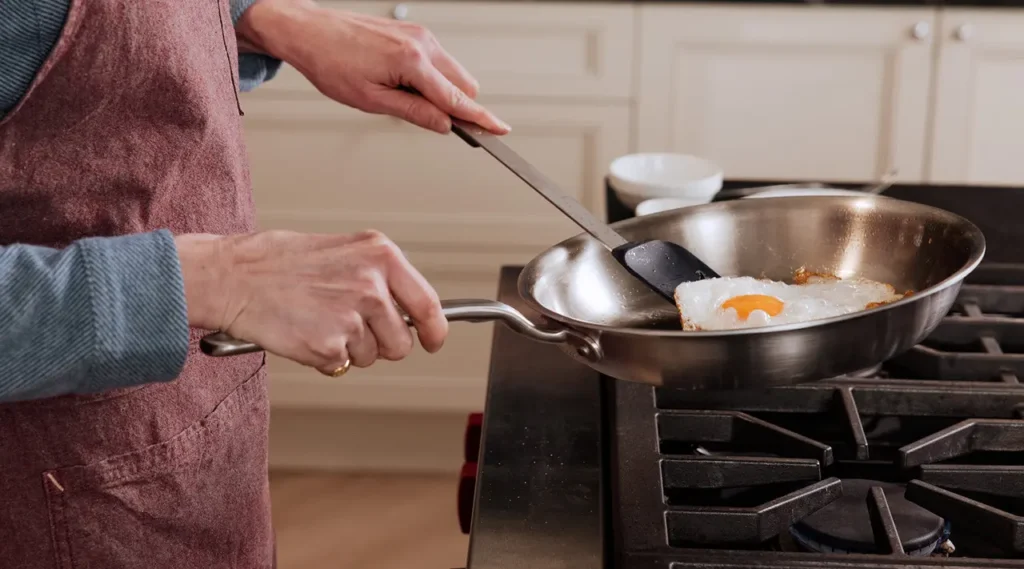
Stainless steel pans are revered by home and professional chefs alike for their incredibly durable, nonreactive surface, as they’re constructed from thin layers of premium metals and alloys optimized for efficiency and conductivity. These are “cladded” together to create a durable, unfussy cooking surface with an attractive burnished exterior.
How to Clean Stainless Steel Pans
To clean your stainless pan, start with warm, soapy water and a non-abrasive sponge. To remove burnt residue, we recommend soaking the pan in hot water before scrubbing its surface with Stainless Steel Cleaner or similar.
If you don’t have a cleaning solution formulated for stainless steel, a little more elbow grease and common kitchen tools will do the job about as well—though it’ll take more effort. A vinegar rinse will help remove rainbow discoloration, while a paste of baking soda and water helps remove stuck-on food.
Make sure to avoid abrasive cleaning tools not specifically formulated for stainless steel, such as steel wool, as they can scratch your pan’s surface.
Do You Really Need to Follow Cookware Cleaning Instructions?
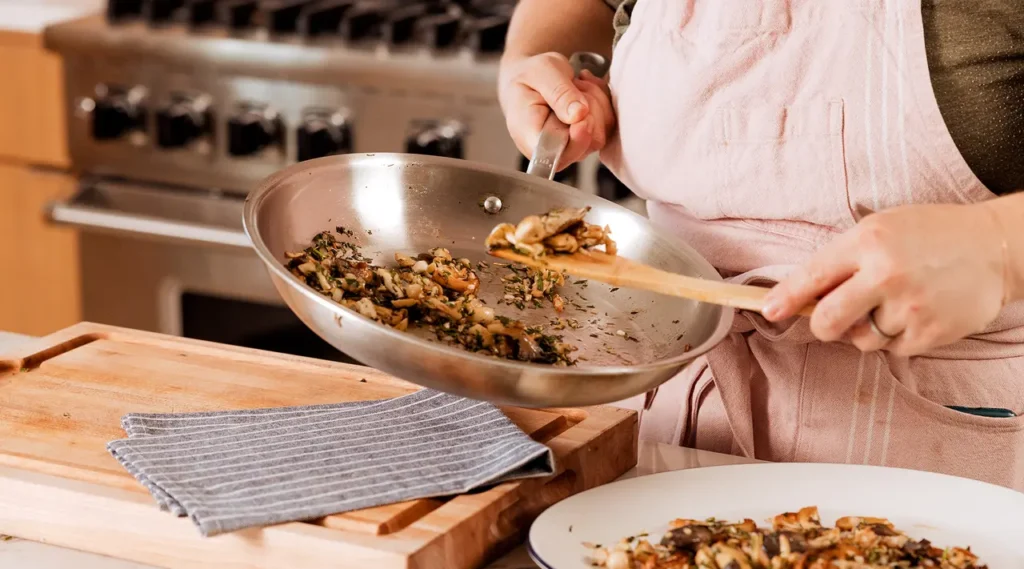
Just as we do with updated user agreements, many of us take cookware’s often-specific cleaning instructions as “something to skim.” However, to prolong the lifespan of your pan, we advise actually reading your cookware’s instructions—and following them.
If you’ve invested in premium cookware that can last decades with proper care, then you’re only doing yourself—and your wallet!—a disservice by not taking considerations with cleaning and care.
Ready to Cook?
Now that you’re an expert on cleaning a frying pan, it’s time to take stock of the pans currently in your kitchen. In need of a new one? Choose from our variety of chef- and home cook-approved materials to find the best fit.
FAQs
Which pan is best for frying eggs?
GlobeHome’s Ceramic Non Stick is ideal for frying eggs. Ceramic nonstick surfaces are easy to cook on and easy to clean. Use low to medium heat and a soft spatula for best results. If you prefer a more traditional feel, a well‑seasoned GlobeHome’s stainless steel will also work, but it requires regular seasoning and care.
How do I remove burnt‑on food from stainless steel ?
Start by letting the pan cool. For stainless steel, soak in hot soapy water, then scrub with a non‑abrasive sponge. Use a Stainless Steel Cleaner or a paste of baking soda and water for stubborn residue. A vinegar rinse removes rainbow discoloration. These methods work for both general cookware and specific pieces like GlobeHome’s stainless steel pan.

Leave a Reply