
If you’ve ever stood in the cookware aisle of a US big-box store or scrolled Shopify for hours trying to pick a new frying pan, you know the dilemma: stainless steel frying pan vs non stick? Both promise to make your weeknight dinners and weekend brunch spreads easier, but they couldn’t be more different. As a home cook who’s tested both through countless batches of scrambled eggs, seared steaks, and stir-fries, I’m breaking down everything you need to know to choose the right pan for your kitchen.
### First, Let’s Start With the Basics: What Sets Them Apart?
Non-stick pans are coated with a layer (usually Teflon or a ceramic alternative) that prevents food from sticking, making them a go-to for delicate dishes like pancakes or fried eggs. Stainless steel pans, on the other hand, are made from a durable metal alloy that heats evenly and reacts with food to create a natural non-stick patina over time.
For US home cooks, the choice often comes down to what you cook most, how much you want to invest, and how you prioritize long-term durability. Let’s dive into the pros and cons of each.
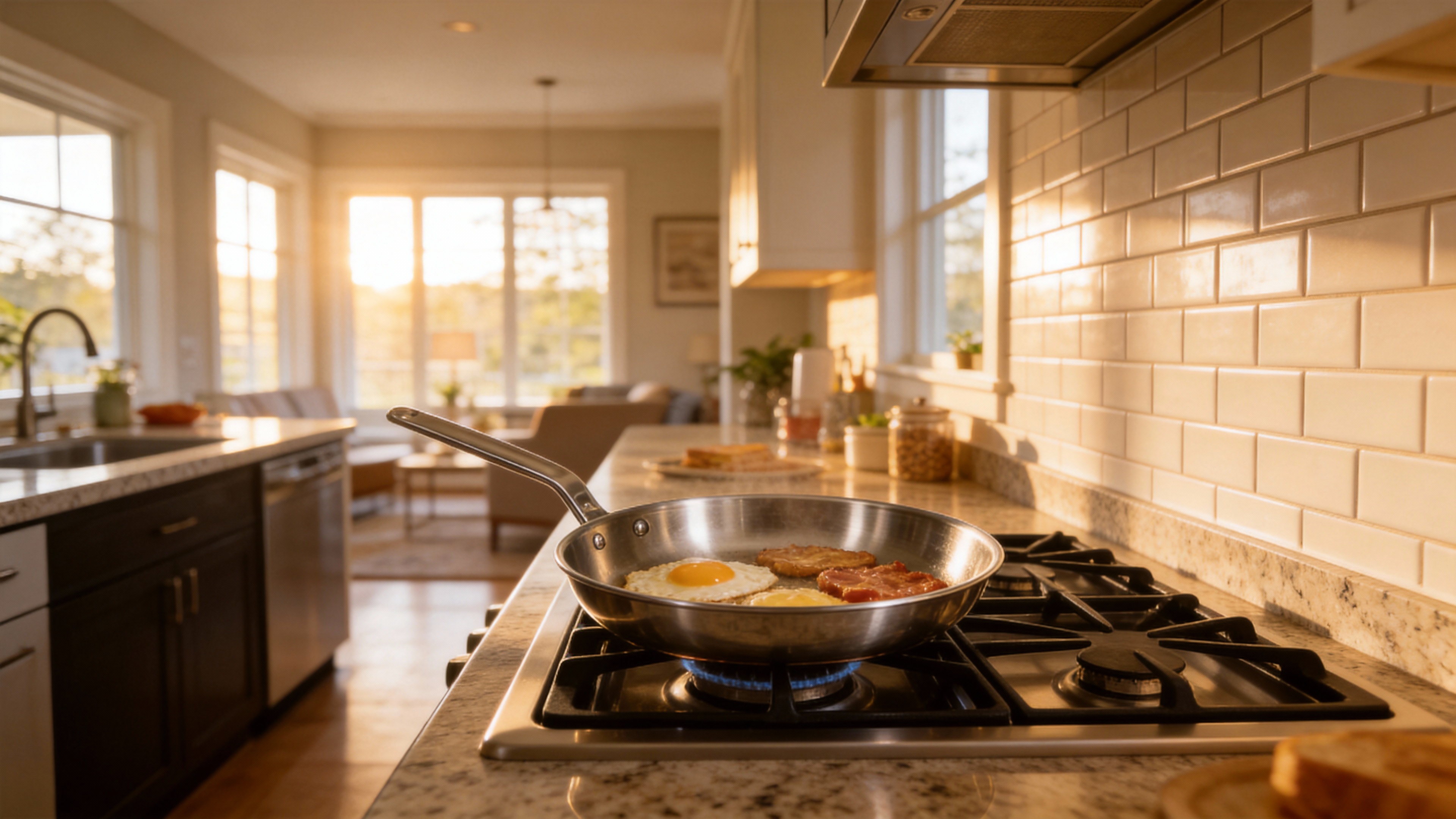
### Stainless Steel Frying Pan: The Heavyweight Champion of Durability
Stainless steel frying pans are the workhorses of many American kitchens, and for good reason. Here’s why they might be the right pick for you:
#### Unbeatable Durability
A high-quality stainless steel pan can last a lifetime—we’re talking 20+ years with proper care. Unlike non-stick pans, which can scratch if you use metal utensils or scrub too hard, stainless steel can handle metal spatulas, steel wool, and high heat without breaking down. For US families that cook multiple meals a day, this means you won’t have to replace your pan every 1-2 years, saving you money in the long run.
#### Perfect for High-Heat Cooking
If you love searing steaks, browning burgers, or stir-frying veggies at high temperatures, stainless steel is your best bet. Most non-stick pans can only handle heat up to 400-500°F, but stainless steel can safely reach 600°F or higher. This is a game-changer for achieving that crispy, golden crust on a New York strip or caramelized veggies—something non-stick pans just can’t deliver consistently.
#### No Harmful Chemicals
Many non-stick pans release fumes when overheated, and some older coatings have raised concerns about perfluoroalkyl substances (PFAS). High-quality stainless steel pans are free from these chemicals, making them a safer choice for families with kids or anyone focused on clean eating. For US cooks prioritizing health and sustainability, this is a major selling point.
#### Natural Non-Stick Patina (With a Little Work)
One common myth about stainless steel is that food always sticks. But with the right technique (heat the pan until water beads up, then add oil), you can create a natural non-stick patina over time. This patina gets better with use, so your pan will perform better the longer you own it.
### Non-Stick Frying Pan: The Quick-and-Easy Kitchen Sidekick
Non-stick pans aren’t going anywhere, and for good reason. They’re ideal for certain cooking tasks, and here’s when they shine:
#### Perfect for Delicate Dishes
If you make scrambled eggs, omelets, crepes, or fish fillets regularly, a non-stick pan is a must. You won’t have to worry about your eggs sticking to the bottom or your fish falling apart when you flip it. For busy US parents whipping up breakfast before school or work, this saves time and reduces cleanup.
#### Minimal Cleanup
The biggest draw of non-stick pans is how easy they are to clean. Most of the time, you can wipe them down with a paper towel or rinse them with warm water—no scrubbing required. This is a huge plus for anyone who hates doing dishes after a long day.
#### Affordable Entry Point
Non-stick pans are generally cheaper than high-quality stainless steel pans, making them a great option for college students, first-time renters, or anyone on a tight budget. Just keep in mind that you’ll likely have to replace them every few years as the coating wears down.
### Stainless Steel Frying Pan vs Non Stick: Which Is Right for Your US Kitchen?
Now that we’ve covered the basics, let’s help you make a decision. Here’s how to choose based on your cooking habits:
#### Choose Stainless Steel If:
– You cook a lot of high-heat dishes like seared meats, stir-fries, or roasted veggies.
– You want a pan that will last a lifetime and save you money long-term.
– You prioritize chemical-free cookware.
– You’re willing to learn the proper technique to build a natural non-stick patina.
#### Choose Non-Stick If:
– You make delicate dishes like eggs, pancakes, or fish fillets several times a week.
– You want minimal cleanup after meals.
– You’re on a tight budget and don’t want to invest in a high-end pan right now.
#### Pro Tip: Why Not Own Both?
Many US home cooks swear by having one of each. Use your non-stick pan for breakfast and delicate dishes, and your stainless steel pan for searing, browning, and high-heat cooking. This way, you get the best of both worlds.
### Practical Tips for Caring for Your Pan
Whichever you choose, proper care will extend the life of your pan. Here’s what you need to know:
#### For Stainless Steel Frying Pans:
– Heat the pan before adding oil. Test it by sprinkling a few drops of water—if they bead up and roll around, the pan is ready.
– Avoid using cold oil in a hot pan, which can cause food to stick.
– Clean with warm, soapy water and a nylon scrubber or steel wool (it won’t scratch the pan).
– Dry immediately after washing to prevent water spots, especially if you have hard water (common in parts of the US like the Midwest and Southwest).
#### For Non-Stick Pans:
– Use silicone, wood, or nylon utensils to avoid scratching the coating.
– Don’t heat the pan empty, as this can damage the non-stick layer.
– Clean with a soft sponge or cloth—avoid steel wool or abrasive cleaners.
– Replace the pan if you see scratches, peeling, or flaking in the coating.
### Our Top Pick: The [Shopify Store Name] Stainless Steel Frying Pan
If you’re leaning toward a stainless steel frying pan, our top pick is the [Shopify Store Name] 10-Inch Stainless Steel Frying Pan. It’s made with a tri-ply construction (stainless steel, aluminum, stainless steel) that heats evenly across the entire surface, eliminating hot spots that can burn your food. It’s oven-safe up to 600°F, so you can start searing on the stovetop and finish cooking in the oven—perfect for dishes like frittatas or roasted chicken thighs.
For US customers, it’s also compatible with all stovetops, including gas, electric, and induction, which is a huge plus for apartment dwellers or anyone with a modern kitchen. Plus, it’s backed by a lifetime warranty, so you can feel confident in your investment.
### Final Thoughts: Stainless Steel Frying Pan vs Non Stick
At the end of the day, the best pan for you depends on your cooking style, budget, and priorities. Non-stick pans are great for quick, easy meals with minimal cleanup, while stainless steel pans are a long-term investment that can handle almost any cooking task.
For US home cooks who want a pan that can grow with their kitchen and last for decades, a stainless steel frying pan is the clear winner. But if you’re just starting out or cook mostly delicate dishes, a non-stick pan is a great entry point. And if you can swing it, owning both gives you the flexibility to cook anything your heart desires.
No matter which you choose, investing in a high-quality pan will make cooking more enjoyable and help you create delicious meals for your family and friends for years to come.