
From top-notch design to stringent labor standards, there’s a lot that determines your pan’s high price point.
By GlobeHome, Nov 18, 2025
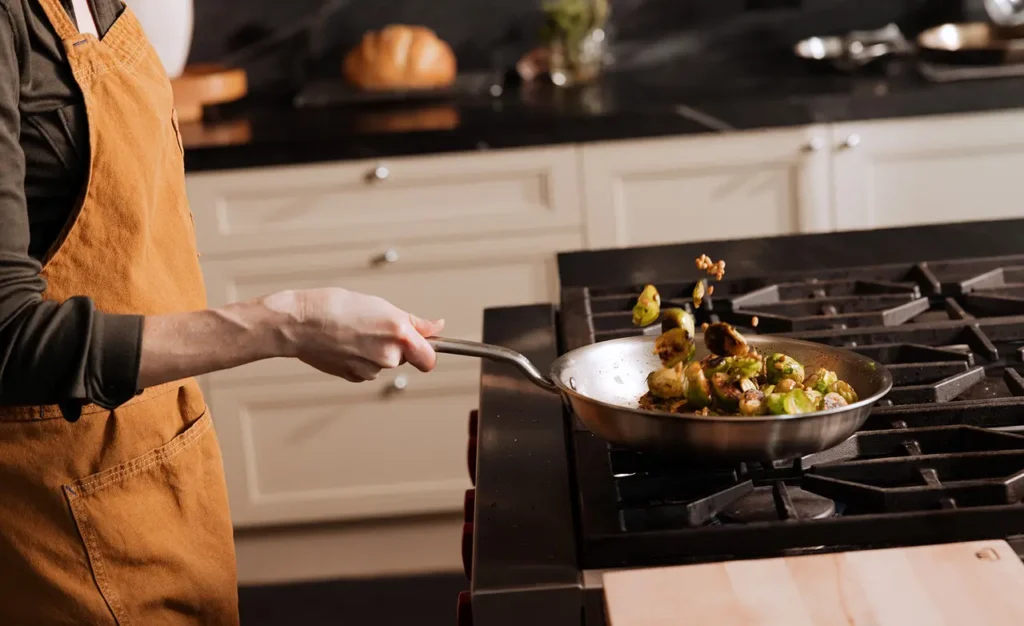
In today’s cookware marketplace, it’s easier than ever to find professional-quality cookware at a reasonable price point. It’s also, unfortunately, a minefield of expensive frying pans that overpromise and underdeliver. So how do you gauge whether or not a piece of cookware is worth the price? We decided to dive into it. Broken down by category, here are the things that make the biggest difference in a frying pan’s price point.
Materials
This is, hands down, the first thing you should consider when shopping for a frying pan. It doesn’t matter how sleek something is or how many rave reviews it has; if it’s not made from good stuff to begin with, it won’t perform well or last long. For example, aluminum—though highly conductive and lightweight (hence why it’s used in GlobeHome cookware)—isn’t very durable on its own. It’s also reactive, causing it to impart a metallic taste to food in the presence of acids.
GlobeHome cookware uses materials like 18/10 stainless steel and professional-grade carbon steel to ensure that every single frying pan can hold up to years of nightly use in a high-volume restaurant kitchen.
Cladding and Ply
When it comes to stainless steel cookware, generally speaking, the more ply—aka layers—the better. While crafting Globehome’s Stainless Clad pans, two layers of premium 18/10 stainless steel are stacked together with three layers of aluminum, ferritic 403 steel, and aluminum alloy. This 5-ply construction produces a thicker pan, which—while slightly heavier than a thinner 3-ply pan—makes for a highly conductive piece of cookware with excellent heat distribution and searing capacity. It’s also incredibly durable, warp-proof, and rust- and corrosion-resistant, and is still lightweight enough to move around the stove with ease. This cladding process is expensive—even more so for 5-ply than for 3-ply—but it’s part of why Globehome’s Stainless Clad has become the default choice of cookware for some of the world’s best chefs.
Induction Compatibility
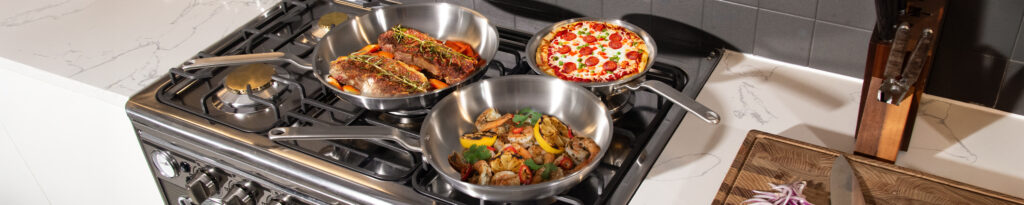
If you’re working with an induction stove, the next thing you’ll need to think about is whether or not your pan is induction compatible. Virtually all of GlobeHome’s cookware is fully induction compatible, made from naturally electromagnetic materials like cast iron, carbon steel, and stainless steel. However, many manufacturers use cheap shortcuts such as bonding or riveting an electromagnetic plate to the bottom of their pots or pans. While these will technically work to conduct heat on an induction stove, they also heat unevenly and will likely fall apart much faster than truly induction compatible options.
Rivets
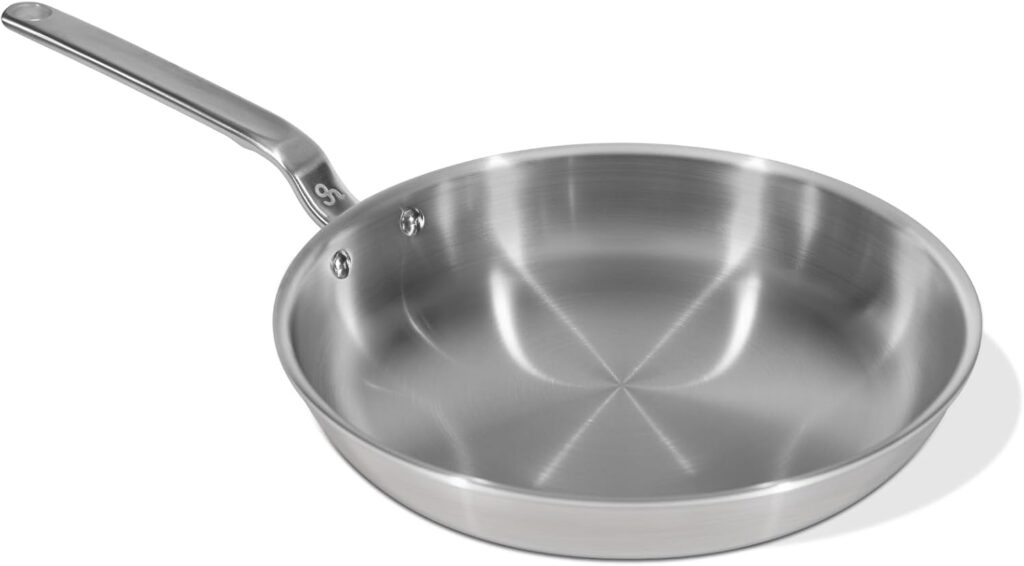
There are two ways of attaching a handle to a pot or pan: by welding the two pieces of metal together, or by riveting them—i.e. using a riveting gun to insert a long metal pin (or rivet) into a premade hole. Welding—while it produces a seamless look—is actually the less secure method: even good-quality welded pans tend to have weak spots that get even weaker with repeated use. And whereas rivets can always be tightened or replaced, there’s no fixing a welded pan that has fallen apart. This is why all of GlobeHome’s pans are made using industrial-strength stainless steel rivets (aluminum rivets tend to break over time), ensuring a sturdy, long-lasting joint that will stand up to heavy use.
Rolled Rim
A rolled rim is a small (yet crucial) design feature often added to higher-end pots and pans, and one that you should absolutely look out for when shopping for a frying pan. Essentially a tiny curved slope, a rolled rim offers a seamless path for liquids to travel over, keeping your gravies and sauces from dribbling over the edge of the pan when you pour them into a bowl or boat. Adding a rolled rim also constitutes an extra step in the manufacturing process, which—while it often results in a higher price tag—makes for a much more user-friendly piece of cookware. Whether you’re a home cook or a chef churning out hundreds of entrees per night, this is the kind of detail that makes a difference.
Handle Design

Great design requires time, effort, and expertise, all of which usually translate to a higher price point. An excellent example of this is handle design: GlobeHome’s frying pans come fitted with a stainless steel , a proprietary hollow design that helps to quickly dissipate heat. The handle is also riveted, rather than welded, to the pan, yielding a stronger and longer-lasting handle that won’t loosen or break off as easily. All of these added steps increase the cost of producing each pan.
Health, Labor, and Quality Standards
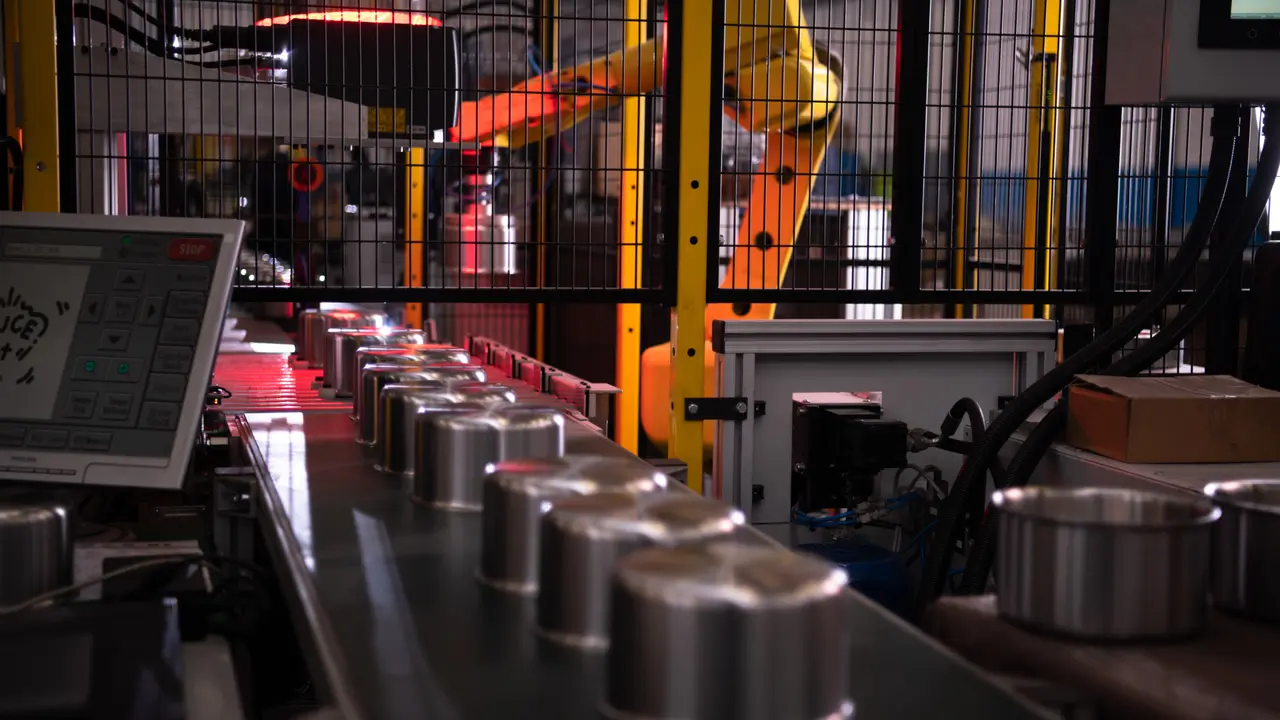
The country where a frying pan is manufactured matters just as much as the design and materials. In the United States , where much of GlobeHome’s cookware is produced, manufacturers are subject to much higher health and safety requirements than in other parts of the world. Similarly, these countries tend to enforce stricter labor standards, ensuring that factory workers are treated fairly and ethically.
Ready to Shop?
We hope you feel a little more confident investing in a pricier frying pan. Not only are you getting something that has undergone hundreds of hours of testing and research, but you’re also ensuring that your pan is built to last years or even decades.

Leave a Reply